Young Nigerians encounter political discussion every day—in classrooms and workplaces, on public transport, in family conversations, and across social media. Interest is valuable, but attention alone does not strengthen democracy. The important step is turning that interest into informed, peaceful, and sustained participation.
That process can begin with an issue rather than a personality. A young citizen might care about employment, education, public transport, electricity, health services, safety, disability access, or the condition of a local road. The next question is: which level of government or public institution is responsible, and what evidence describes the problem? Understanding responsibility makes civic engagement more focused and reduces the temptation to treat every concern as a slogan.
Build a reliable information routine
Social platforms can bring public issues to attention quickly, but speed is not the same as accuracy. Before sharing a dramatic post, pause and find the original source. Check the date, location, and full context. Look for confirmation from credible and independent sources. Election procedures should be checked against current information from the appropriate election authority.
Young citizens can help friends and relatives by modelling this discipline. Instead of replying with insults, ask: “Where did this come from?” or “Is there a complete statement?” A correction offered calmly is more likely to be heard than an attempt to embarrass someone.
Participate between elections
Democratic participation is not limited to casting a ballot. Young people can attend lawful community meetings, study a public proposal, submit a written question, volunteer for a nonpartisan civic activity, help make information accessible, or document a local service problem responsibly. They can also encourage eligible relatives and friends to confirm current voter information through official channels.
Service is another form of civic learning. Helping to organise a clean-up, accessibility walk-through, reading group, or public-information session can reveal how decisions affect different people. It also develops practical skills—facilitation, listening, writing, planning, translation, and teamwork—that support long-term community leadership.
Disagree without dehumanising
A healthy democracy contains disagreement. Peaceful participation does not require silence or passive acceptance; it requires discipline. Criticise decisions and arguments without attacking a person’s ethnicity, religion, gender, disability, region, or dignity. Reject calls to violence, intimidation, or collective blame, even when they come from someone you ordinarily support.
Online conduct matters too. Do not publish another person’s address, phone number, identity document, or private messages to win an argument. Avoid circulating unverified accusations. If a discussion becomes threatening, preserve relevant evidence and use appropriate reporting channels rather than organising retaliation.
Create room for more voices
Youth engagement is stronger when it includes young women, persons with disabilities, apprentices, students, workers, rural residents, and people who communicate in different languages. Meeting organisers can help by choosing accessible venues, sharing information early, explaining unfamiliar terms, and allowing more than the loudest voices to contribute.
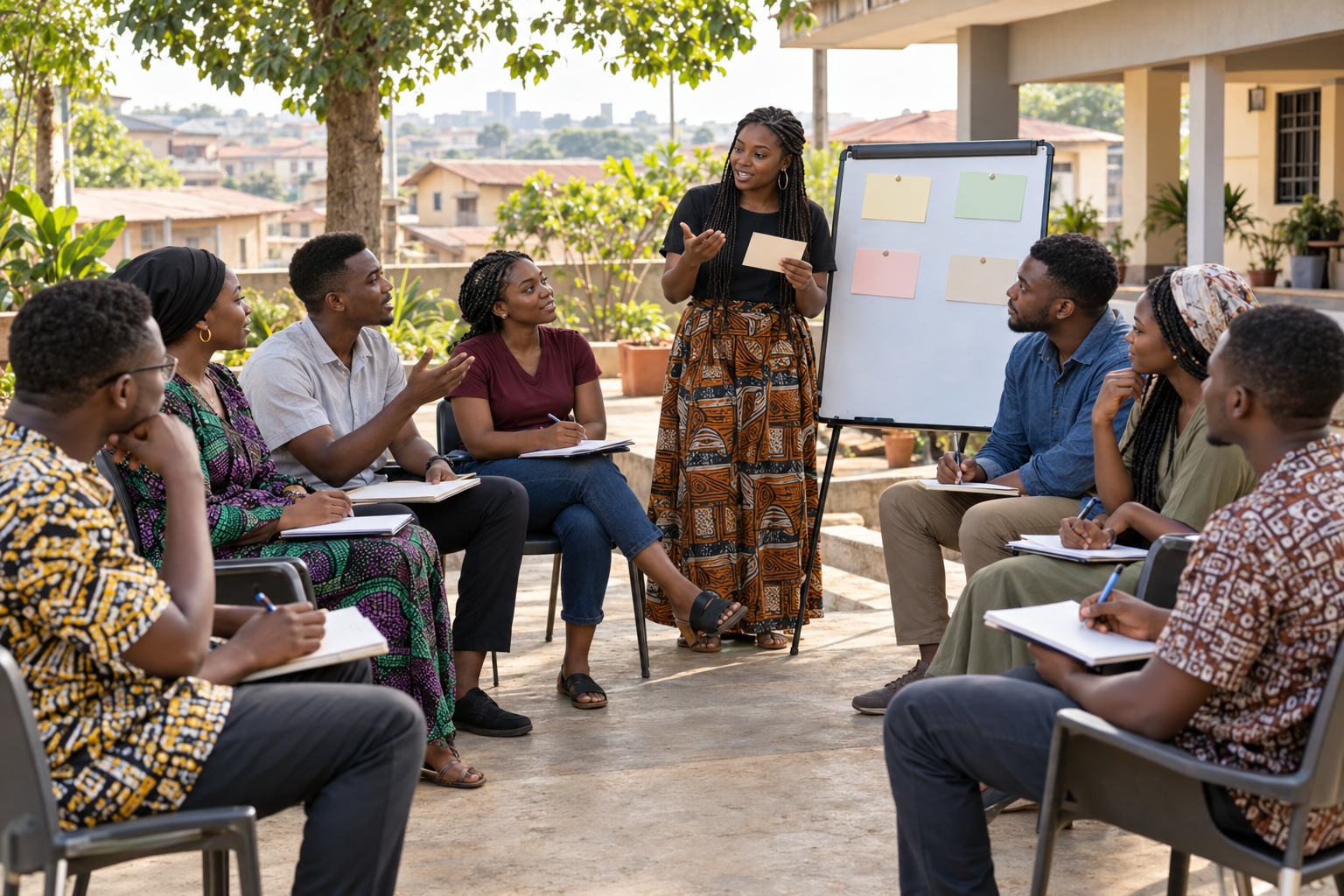
CLAI encourages young citizens to form learning circles around practical civic questions. A small group can compare reliable sources, examine the responsibilities of public offices, practise respectful dialogue, and plan one achievable community action. Such a circle should remain nonpartisan and should not pressure members to support a candidate or party.
Political interest becomes democratic influence through habits: learn before repeating, listen before judging, organise around evidence, participate lawfully, and stay engaged after election day. Young voices matter most when they are informed, independent, inclusive, and peaceful.